


7 Tips for Buying Custom Printed Paper Bags
Buying custom printed paper bags can look simple until paper weight, ink coverage, handles, and shipping costs affect the final result. A bag may look beautiful on a screen, yet crease badly beside a checkout counter. The right choice needs practical testing, not only attractive artwork.
Packaging sustainability researcher Dr. Karli Verghese explains, “Packaging must be designed as part of a system, not as an isolated object.” That principle matters when choosing custom printed paper bags for retail stores, events, restaurants, or product launches. The bag must protect its contents, carry the brand clearly, and suit the customer’s real handling experience.
Small details matter.
This guide explores seven useful buying tips, from selecting suitable paper thickness to checking handle strength and print accuracy. It also considers recycled content, responsible sourcing, minimum order quantities, and delivery planning. A glossy finish may impress customers, but it can also hide fingerprints and increase costs. A cheaper bag may save money initially, then fail under a heavy bottle or boxed product.
Some decisions remain imperfect. No single paper bag fits every business, and sustainability claims require careful supplier verification. Requesting a physical sample is often wiser than trusting a digital proof. Compare the sample under store lighting, fill it with typical products, and carry it for several minutes. These practical checks reveal weaknesses early and help turn custom printed paper bags into a dependable part of the customer experience.
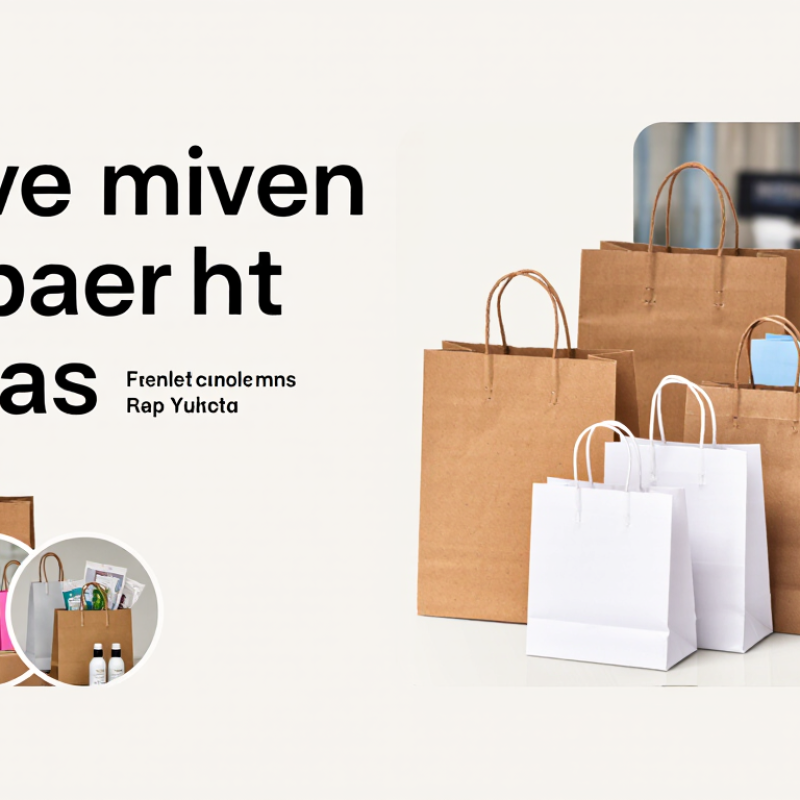
Define Your Bag’s Purpose, Audience, and Essential Requirements
Before choosing artwork, define what the bag must do. A bakery bag may need grease resistance and a flat base. A boutique bag may need stronger handles and a wider opening. A lunch bag needs safe contact materials and simple carrying. Write these requirements down. Vague briefs create expensive revisions.
Tip 1: Name the primary user. A premium shopper may value texture and quiet colors. A busy takeaway customer may prefer light weight and easy recycling. Two Sides’ 2023 Trend Tracker reported that 63% of consumers view paper and cardboard packaging as more environmentally responsible. However, that perception does not replace practical performance. A weak handle damages trust quickly.
Tip 2: Match the print to the audience and setting. Measure the product, storage space, and expected carrying distance. Add at least one real sample test. Smithers’ market outlook, The Future of Sustainable Packaging to 2028, identifies sustainability and functional design as major packaging priorities. Still, smaller text can disappear on recycled fibers, and dark ink may look uneven. That is easy to overlook. Tip 3: Confirm essential specifications before approval, including paper weight, dimensions, handle style, printing method, finish, and minimum order quantity. In production reviews, teams sometimes focus too much on appearance. I have found that the “perfect” design often needs one more practical question: what happens after ten minutes in a customer’s hand?
7 Tips for Buying Custom Printed Paper Bags - Define Your Bag’s Purpose, Audience, and Essential Requirements
| No. | Buying Tip | Purpose or Audience | Key Requirements | Recommended Specifications | Practical Checks Before Ordering |
|---|---|---|---|---|---|
| 1 | Define the Bag’s Purpose | Retail purchases, takeaway food, gifts, events, or promotional distribution | The bag should match the product weight, handling conditions, storage time, and expected reuse. | Choose a flat, gusseted, or twisted-handle format according to the product shape and carrying method. | List the product dimensions, maximum loaded weight, carrying distance, and whether the bag may contact food. |
| 2 | Identify the Target Audience | Everyday shoppers, premium customers, families, tourists, or environmentally conscious consumers | Size, strength, appearance, comfort, and sustainability claims should reflect customer expectations. | Use comfortable handles for heavier goods; use a clean one- or two-color design for cost-sensitive distribution. | Ask representative users to carry a filled sample and review the handle comfort, opening, stability, and appearance. |
| 3 | Select Suitable Paper Weight | Light merchandise, clothing, books, boxed products, or heavier retail items | Paper must resist tearing at the handles, side folds, and bottom when loaded. | Common retail paper bags use approximately 80–120 gsm paper; heavier loads may require thicker paper or reinforced construction. | Request a filled-load test and confirm the paper grammage, bottom construction, handle attachment, and safety margin. |
| 4 | Choose the Right Size and Structure | Small accessories, standard retail products, wide boxes, bottles, or irregular items | The bag should hold the product without excessive empty space or pressure on the side seams. | Specify width, height, and gusset depth in millimetres; use a gusset when the product has depth or requires a wider base. | Measure the packed product and add practical clearance for insertion, removal, protective wrapping, and fold tolerance. |
| 5 | Plan the Printing and Artwork | Businesses seeking recognition, seasonal packaging, event visibility, or simple information display | Artwork must remain legible across folds, seams, handles, and curved or irregular printed areas. | Prepare vector artwork where possible; define colors using a recognized print color system and allow bleed where required. | Approve a digital proof and, for important color work, request a physical pre-production sample before mass production. |
| 6 | Evaluate Sustainability Claims | Customers who value responsible materials, recyclability, and reduced packaging impact | Material claims should be specific, verifiable, and consistent with local recycling and disposal systems. | Consider recyclable paper, water-based inks, recycled content, and certification documentation where relevant. | Request evidence for recycled content or responsible-forest sourcing and avoid unsupported terms such as “100% eco-friendly.” |
| 7 | Confirm Quantity, Quality, and Delivery | Small trial orders, regular retail supply, seasonal campaigns, or large-volume procurement | The order must meet the approved dimensions, print quality, strength, packing method, and delivery schedule. | Set an approved sample, acceptable defect limits, carton quantities, delivery terms, and reorder requirements in writing. | Check a production sample, inspect random units on arrival, verify carton counts, and retain approved artwork and specifications for reorders. |
Note: Paper grammage and load capacity are indicative ranges. Final specifications should be validated through product-specific testing because bag performance depends on paper quality, construction, handles, dimensions, and moisture exposure.
Related Posts
-
Top 10 Types of Branded Paper Bags for Global Buyers?
-
How to Choose Custom Paper Shopping Bags for Your Business
-

2026 Best Brown Paper Bags for Wholesale Buyers
-
Where to Buy the Best Cheap Paper Bags from China?
-
Top Printed Paper Bags Manufacturers for Global Buyers
-
2026 Best Printed Kraft Bags for Wholesale Buyers