How to Choose Custom Paper Shopping Bags for Your Business
For a retailer, a shopping bag is part of the customer experience and a practical packaging choice. Custom paper shopping bags can carry a logo, protect purchases, and give customers an easy way to transport goods. The right option depends on more than appearance. Bag dimensions, paper weight, handle style, print method, and order quantity all affect cost and performance. Small details matter. A narrow base may not hold a boxed product securely, while oversized bags can waste material and storage space.
This guide explains how to compare those details before placing an order. A bakery may need sturdy bags with room for pastry boxes, while a clothing shop may value a clean finish and comfortable handles. Start with the products you sell, their typical weight, and how customers carry them. Then review paper specifications and request a sample. Check its seams, handles, print alignment, and feel under a realistic load. Ask suppliers for clear details about material composition and any recycled-content claims. A glossy proof can look convincing, but it cannot show how a bag performs in daily use. There is no perfect choice for every business. One common planning mistake is prioritizing a low unit price before checking minimum quantities, shipping, and storage needs. A practical decision balances durability, presentation, budget, and credible supplier information.
Define Bag Size and Paper GSM Around Product Dimensions and Weight
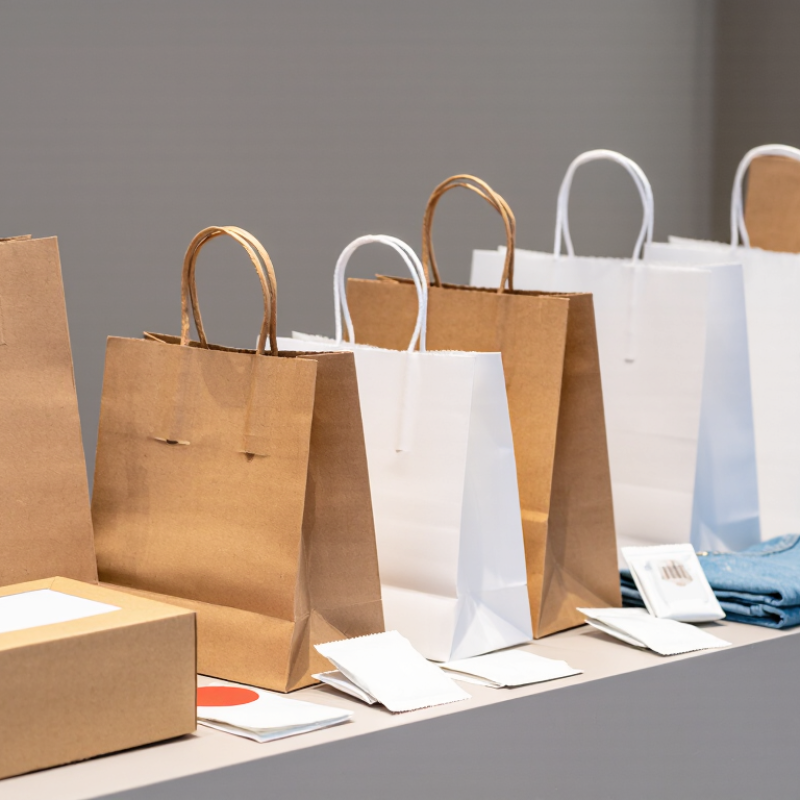
When choosing custom paper shopping bags, start with the product, not a standard catalogue size. Measure the product’s length, width, and height, then allow space for tissue, wrapping, or protective inserts. A tight fit may crease the package and strain the handles. An oversized bag wastes paper and looks careless. The base should support the product without forcing the side panels outward.
Paper GSM should match both product weight and handling conditions. Lightweight items may suit 120–170 GSM paper, while heavier products often need 200 GSM or more. However, GSM alone does not guarantee strength. Paper quality, bag dimensions, reinforced bases, and handle attachment also matter. A tall, narrow bag can fail sooner than a wider bag carrying the same weight. Real packing tests are essential. Fill the bag with the heaviest expected product, lift it repeatedly, and inspect the bottom and handle joints. A sample may look strong but still perform poorly in daily use. That result deserves honest reconsideration.
Tips: Leave a small clearance around the product. Test the bag for at least 24 hours with its expected load. Check filled bags on shelves and during customer carrying. If the bag feels excessive, reduce GSM only after testing. Cost savings can become expensive when the design needs reprinting.
Compare Kraft Paper Grades Using ISO 536 Grammage Measurements
Choosing custom paper shopping bags becomes easier when kraft paper grades are compared by measured grammage. ISO 536 defines grammage as the paper’s mass per square metre, expressed in g/m². This measurement provides a reliable starting point, but it does not tell the whole story. A 120 g/m² sheet usually feels lighter than a 180 g/m² sheet. It may suit small purchases, bakery items, or short carrying distances.
Heavier kraft grades can support larger loads and create a firmer bag body. However, higher grammage does not automatically guarantee better performance. Fibre quality, moisture, paper direction, handle attachment, and bottom-fold design also matter. In practical testing, fill sample bags with the intended products, then carry them for several minutes. Check the seams, handle holes, and base corners. Small weaknesses appear quickly.
Measure consistently. Use paper samples from the same production batch, and compare their ISO 536 results under controlled conditions. A bag designed for clothing may need different paper from one carrying glass jars. That difference is easy to overlook. It is also worth testing during humid weather, because paper can soften after absorbing moisture. Choose the lightest grade that safely meets your load requirements, rather than selecting the thickest option by habit. That approach can reduce material use, though the result may feel less rigid than expected.
How to Choose Custom Paper Shopping Bags for Your Business - Compare Kraft Paper Grades Using ISO 536 Grammage Measurements
Measurement note: Grammage is the mass of paper per unit area, expressed in g/m², and can be determined using ISO 536. The ranges above are practical comparison bands, not grades defined by ISO 536. Grammage alone does not determine a finished bag’s carrying capacity; paper properties, bag dimensions, seams, handles, and testing also matter.
Choose Handle and Bottom Designs to Suit Expected Carrying Loads
Choose handles by the heaviest realistic purchase, not the average basket.
A bag carrying two folded shirts faces different stress from one holding glass jars.
Twisted paper handles spread grip across more fibers,
while flat handles can feel comfortable with broader loads. Both can tear if their attachment patches are too small.
Ask your converter for handle material, patch size, and tested load—not just paper weight.
The bottom matters just as much. A broad, reinforced base helps keep boxed items upright; a narrow base may suit lighter, compact goods.
Test finished samples with your actual products. Weigh them, carry them for several minutes, and check for
seam strain, handle stretch, or a sagging base. Small flaws show quickly.
ASTM D5276 describes drop testing for loaded containers, and
ASTM D642 covers compression testing; these methods offer useful testing principles, but neither sets a universal safe capacity for shopping bags.
Record results at your intended maximum load, then retest after storage or moisture exposure. That extra check may feel fussy.
It can reveal weak handle patches before customers do.
Select Printing and Finishes Using ISO 12647 Color-Control Standards
How to Choose Custom Paper Shopping Bags for Your Business
Color control should begin before artwork approval.
Ask your printer which ISO 12647 process applies to your bags. Flexographic production commonly follows ISO 12647-6, while offset-lithographic labels may follow ISO 12647-2. These standards define targets for ink density, tone value increase, gray balance, and color consistency. They do not make every paper surface look identical.
Choose the paper first, then judge color.
A warm recycled kraft stock can turn a clean blue into a muted green. White coated paper usually produces sharper images and brighter reds. Request a contract proof made with the intended substrate, not a screen preview. Measure important colors with a spectrophotometer and agree on an acceptable Delta E range. Small text, solid dark panels, and skin tones deserve extra checking. They expose poor registration quickly.
Industry evidence supports this care.
The Smithers report The Future of Sustainable Packaging to 2028 identifies paper-based formats as major growth areas in sustainable packaging demand. Two Sides’ Global Attitudes to Print, Paper and Paper Packaging 2023 also reports strong consumer acceptance of paper packaging when it is responsibly produced. Still, “recyclable” does not guarantee attractive printing. My production experience suggests that dark kraft bags often need lighter artwork and stronger contrast. I once approved a digital proof too quickly; the final bag looked flatter than expected. That mistake was avoidable. Record the paper shade, ink system, drying conditions, and press measurements for every repeat order.
Check Sustainability Claims Against the EPA’s 68.2% U.S. Paper Recycling Rate in 2018
Custom paper shopping bags can support a practical, polished shopping experience, but sustainability claims deserve a closer look. The U.S. Environmental Protection Agency reported that 68.2% of paper and paperboard generated in the United States was recycled in 2018. That is a national, historical rate—not a promise that every bag will be recycled. Local collection rules and sorting facilities vary. That distinction matters.
When comparing bags, ask suppliers what “recyclable” and “made with recycled content” mean for the specific product. They describe different things. A bag may contain recycled fiber yet still be difficult to process if it has plastic lamination, heavy coatings, or attached materials.
Check the handles, too: paper handles may be easier to separate than some mixed-material options. Request written specifications, including recycled-content percentages and any coating details. I would not choose a bag by one percentage alone; durability matters, since a bag that tears after one trip may not serve customers well.
Tips:
Match bag size and strength to typical purchases, then test a sample with real items. Ask whether local programs accept the finished bag, including its handles and coating. Keep supplier claims and product specifications on file, and avoid promising that every customer can recycle the bag.