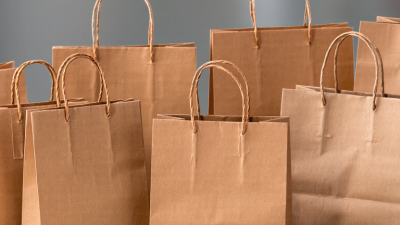
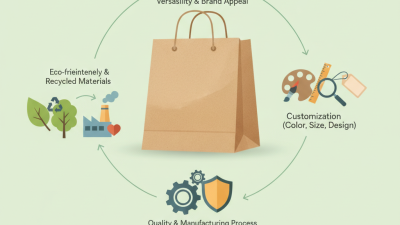
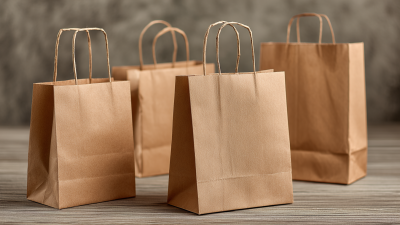
Choosing the right custom kraft bags involves more than selecting a brown paper finish. Size, paper weight, handle strength, printing quality, moisture exposure, and end-of-life options all affect performance. A bag that looks attractive may still tear beside a busy checkout counter.
Market evidence shows why this decision deserves careful review. Two Sides reported in its 2023 European Packaging Preferences study that 62% of consumers viewed paper and cardboard as the most sustainable packaging materials. Smithers also identifies paper-based packaging as a major growth area, driven by retailer commitments and changing consumer expectations. However, perception is not proof. Kraft paper is not automatically sustainable. Recycled content, responsible forestry, inks, coatings, transport distance, and local recycling systems matter.
Ellen MacArthur, a leading circular-economy authority, states, “A circular economy is based on the principles of designing out waste and pollution, keeping products and materials in use, and regenerating natural systems.” That principle gives this guide a practical direction. The best custom kraft bags should support branding while reducing unnecessary material and avoiding premature replacement.
Small details matter.
A reinforced handle can prevent spills. A correctly sized base can reduce paper use. A recyclable finish may simplify disposal. Yet businesses sometimes choose the cheapest option first, then pay more through damaged products and inconsistent customer experiences. That is an uncomfortable lesson, but it deserves attention.
The following ten tips examine material specifications, customization, supplier reliability, environmental claims, and real-world usability. Each point helps businesses make a more informed packaging decision.

Tips 1–3: Define the bag’s purpose before choosing paper weight. A pastry bag may need 100–120 gsm kraft paper for better stiffness. A lightweight clothing purchase may work with 80–100 gsm paper. Test the bag with real products. Empty samples can be misleading. Record whether handles stretch, bottoms flex, or corners crease.
Tips 4–6: Estimate capacity by measuring the product after packing, not before. Include tissue paper, boxes, and protective inserts. A narrow bag may suit bottles, while a wider base supports folded goods. Check the bag’s height, width, and gusset separately. Small size errors become costly during busy sales periods. My early estimates were too optimistic. Actual packing tests changed the dimensions.
Tips 7–10: Match 80–120 gsm paper to carrying conditions and handling time. Thicker paper usually feels stronger, but it can increase material use and shipping weight. Ask a packaging technician or supplier for sample specifications, including paper strength and handle attachment. Run a simple drop and carry test with the heaviest normal load. Inspect the bag after repeated handling. Also review applicable packaging and labeling requirements in your market. A useful design must look clean, carry safely, and fit the customer’s experience.
10 Tips for Choosing Custom Kraft Bags for Your Business
Compare Kraft Grades Using ISO 536 Grammage and Strength-Test Data
Custom kraft bags should be selected by evidence, not appearance alone. Start with ISO 536 grammage, which reports paper mass in grams per square metre. A heavier grade usually feels sturdier, but it can also increase cost and shipping weight. Texture may mislead the hand. Request the measured grammage, production tolerance, and fiber details from the converter. Compare samples under the same humidity conditions, because moisture can change paper behavior.
Strength data gives the practical picture. Check tensile strength in both machine and cross directions. Review tear resistance, burst strength, and handle attachment results when the bag carries weight. These figures need test methods, sample sizes, and units beside them. Otherwise, comparisons are weak. Fill each sample with the intended product, leave it for several hours, and repeat lifting from different angles. Drop testing reveals failures that laboratory sheets may hide. It is not elegant, but it is honest.
Ask for recent certificates, traceable batch numbers, and independent laboratory reports where risk is higher. Compare the weakest result, not the best headline value. A 90 g/m² paper may outperform a 110 g/m² grade when fibers, seams, and moisture control are better. I have seen attractive samples fail at the handle fold. That mistake changed the specification. Consider print coverage, gusset depth, recycled content, storage conditions, and expected load. Leave a safety margin. Perfect predictions are rare.
| Tip | Typical Bag Use | Recommended Kraft Grade | Grammage (ISO 536) |
Tensile Strength (ISO 1924-2) |
Bursting Strength (ISO 2758) |
Tearing Resistance (ISO 1974) |
Moisture Target | Selection Guidance |
|---|---|---|---|---|---|---|---|---|
| 1 | Lightweight retail bags | Recycled or mixed-fibre kraft | 60–80 g/m² | MD: 45–75 N/15 mm CD: 20–40 N/15 mm |
120–220 kPa | MD/CD: 450–750 mN | 5–8% | Choose this range for clothing, stationery, bakery boxes, and other dry products with a typical load below 2 kg. |
| 2 | General-purpose shopping bags | Virgin kraft paper | 80–100 g/m² | MD: 65–100 N/15 mm CD: 30–55 N/15 mm |
180–300 kPa | MD/CD: 600–950 mN | 5–8% | A balanced option for groceries, gifts, and takeaway packaging when moderate carrying strength and good printability are required. |
| 3 | Heavy retail or gift bags | High-strength virgin kraft | 100–120 g/m² | MD: 85–125 N/15 mm CD: 40–70 N/15 mm |
250–380 kPa | MD/CD: 750–1,150 mN | 5–8% | Use a higher grammage when the bag carries dense products, has long handles, or must withstand repeated handling. |
| 4 | Paper bags for flour, rice, or pet food | Sack kraft, virgin fibre | 70–100 g/m² per ply | MD: 75–120 N/15 mm CD: 35–65 N/15 mm |
220–360 kPa | MD/CD: 800–1,250 mN | 5–8% | Prioritize high tear resistance and seam performance. Multi-ply construction is often more effective than simply increasing one paper layer. |
| 5 | Produce and chilled-food carry bags | Wet-strength kraft or treated kraft | 90–120 g/m² | MD: 70–115 N/15 mm CD: 35–65 N/15 mm |
220–350 kPa | MD/CD: 650–1,050 mN | 5–8% before use | Standard kraft loses strength when wet. Request wet tensile and wet burst data if condensation, leakage, or damp surfaces are expected. |
| 6 | Bags with die-cut handles | High-strength kraft with handle reinforcement | 100–140 g/m² | MD: 90–135 N/15 mm CD: 45–80 N/15 mm |
280–420 kPa | MD/CD: 850–1,300 mN | 5–8% | The handle area can fail before the paper body. Specify reinforcement patches, rounded corners, and a handle pull test in addition to paper strength. |
| 7 | Long-distance shipping or courier bags | Heavy-duty sack kraft | 120–170 g/m² | MD: 110–170 N/15 mm CD: 60–100 N/15 mm |
350–550 kPa | MD/CD: 1,000–1,600 mN | 5–8% | Select for abrasion, stacking, and rough handling. Evaluate the complete bag, including seams, closures, gussets, and puncture resistance. |
| 8 | Premium printed bags | 90–120 g/m² | MD: 70–115 N/15 mm CD: 35–65 N/15 mm |
220–360 kPa | MD/CD: 650–1,050 mN | 5–8% | A smoother surface improves registration and ink coverage. Confirm basis weight, caliper, porosity, and colour consistency rather than judging appearance alone. | |
| 9 | Bags exposed to oil or grease | Kraft with grease-resistant treatment | 70–110 g/m² | MD: 60–110 N/15 mm CD: 30–60 N/15 mm |
180–330 kPa | MD/CD: 550–1,000 mN | 5–8% | Paper strength alone does not prove barrier performance. Request oil and grease resistance data that matches the food, temperature, and contact time. |
| 10 | Sustainable-content retail bags | 80–120 g/m² | MD: 55–100 N/15 mm CD: 25–55 N/15 mm |
160–300 kPa | MD/CD: 500–950 mN | 5–8% | Ask for recycled-fibre content, recovered-fibre quality, and batch-to-batch strength data. A higher grammage may be needed to offset lower average fibre strength. |
Custom kraft bags should be selected by load, handling, and testing evidence, not appearance alone. A bag carrying 2 kilograms of clothing needs different construction from one holding dense food ingredients. Handle width, attachment points, paper ply, and bottom folds all affect performance. Test the weak points.
ISO 21898 provides useful guidance for evaluating flexible bulk containers, including lifting strength, seam performance, and resistance to repeated handling. However, it is not automatically a complete standard for every retail kraft bag. Confirm the test scope with a qualified laboratory before using its results. This distinction matters when a bag has glued paper handles rather than lifting loops. A practical test should represent real conditions: filled weight, carrying distance, storage time, humidity, and sudden lifting. Small details matter.
Choose handles that spread pressure across reinforced areas. A narrow handle can cut into fingers and overload the attachment zone. Extra paper layers may improve strength, but they can also increase material use and cost. Prototype testing often reveals uncomfortable truths. One sample may pass a static load test but fail after moisture exposure. Another may look weak yet perform well because its folds distribute stress. Record failures, adjust the construction, and repeat testing with production-equivalent materials. That evidence supports a more reliable purchasing decision than visual inspection alone.
Match handles and construction to the expected load, then validate the finished bag with a suitable filled-load test. The chart shows representative kraft-paper basis weights commonly used when planning different load classes.
Basis-weight guidance is indicative rather than a performance guarantee. Actual capacity depends on paper grade, ply structure, gussets, bottom construction, handle attachment, moisture, and filling method. ISO 21898 applies to flexible intermediate bulk containers, so confirm its applicability before using it as a test reference for paper bags.
Choosing custom kraft bags starts with the printing method, not just the artwork. A one-color design often gives the clearest result on natural kraft paper. Its strong contrast works well for logos, product names, and simple illustrations. Keep it clean.
Two-color printing adds depth without making the bag look crowded. A dark base with one accent color can guide the customer’s attention. Three or four colors create richer images, but they demand tighter registration and better file preparation. Small text may lose sharpness when colors overlap. I have seen attractive designs become muddy because the ink coverage was too heavy.
Ink coverage matters as much as color count. Large solid areas can make kraft paper feel darker, rougher, or slightly uneven. The paper absorbs ink differently across each sheet. That variation is part of its character, but it can challenge brand consistency. Request a physical proof, then inspect the handles, folds, and bottom gusset. Those areas often distort artwork. Check color under store lighting, not only on a bright monitor. A slightly imperfect proof is useful. It exposes problems before production. For reliable results, use bold shapes, generous spacing, and lettering large enough to survive handling. The most polished bag is not always the most colorful one.
When choosing custom kraft bags, verify the FSC certificate before admiring the printed design. FSC certification confirms that the paper fiber comes from responsibly managed, traceable sources. Its 2023 Facts and Figures report recorded more than 160 million hectares under FSC forest certification worldwide. Ask the supplier for a valid certificate code, certification scope, and chain-of-custody details. A printed FSC logo alone proves very little.
Recyclability requires a separate check. EN 643 classifies recovered paper by grade and identifies unwanted materials that can disrupt recycling. Kraft bags should use paper handles, water-based inks, and easily removable labels where possible. Avoid heavy plastic laminates, metallic films, and thick coatings. The Confederation of European Paper Industries reported a 79.3% paper recycling rate in Europe for 2022. That figure is encouraging, but not every bag enters a suitable collection stream.
Test a sample with a local recycler. Tear the bag after use and inspect the layers. I once overlooked a thin window film; it made the bag look premium, but complicated fiber recovery. Request written material specifications and EN 643-related recyclability guidance. Suppliers may provide confident answers without independent evidence. Check the paperwork twice. A recyclable claim should match the actual bag, ink, adhesive, and disposal system.