Back to top

10 Best Hair Color Tubes for Global Buyers?

Hair color purchasing now reaches far beyond salon shelves. Global buyers compare shade performance, ingredient transparency, tube design, and regulatory readiness. A professional Hair Color Tube must protect the formula from air, light, and contamination. It must also support accurate dosing behind a salon chair.

Grand View Research estimates that the global hair color market reached approximately USD 25.34 billion in 2023. Its 2024–2030 analysis also projects continued market growth, driven by at-home coloring and premium formulations. That growth sounds impressive. Yet market size alone cannot identify a reliable product. Euromonitor International’s 2024 beauty and personal care analysis highlights stronger consumer attention to wellness, claims, and product value. These expectations affect buyers in Europe, North America, Asia, and emerging markets differently.

This guide examines ten leading hair color tubes for international purchasing decisions. The comparison considers shade consistency, cream texture, oxidation control, tube materials, fill accuracy, shelf stability, and labeling quality. We also review INCI disclosure, batch traceability, multilingual packaging, and evidence supporting color claims. Cosmetics Europe’s market reporting reinforces the importance of responsible product communication and regulatory compliance. A tube that wins on price may fail during transport. A premium formula may lack practical filling efficiency. That matters.

No ranking is universally correct. Supplier verification remains essential. Buyers should request technical files, safety documentation, stability data, and representative samples before placing large orders. This review offers a practical starting point, not a substitute for local compliance checks. Real-world results can vary with hair porosity, developer strength, water quality, and application skill. Those limitations deserve attention.
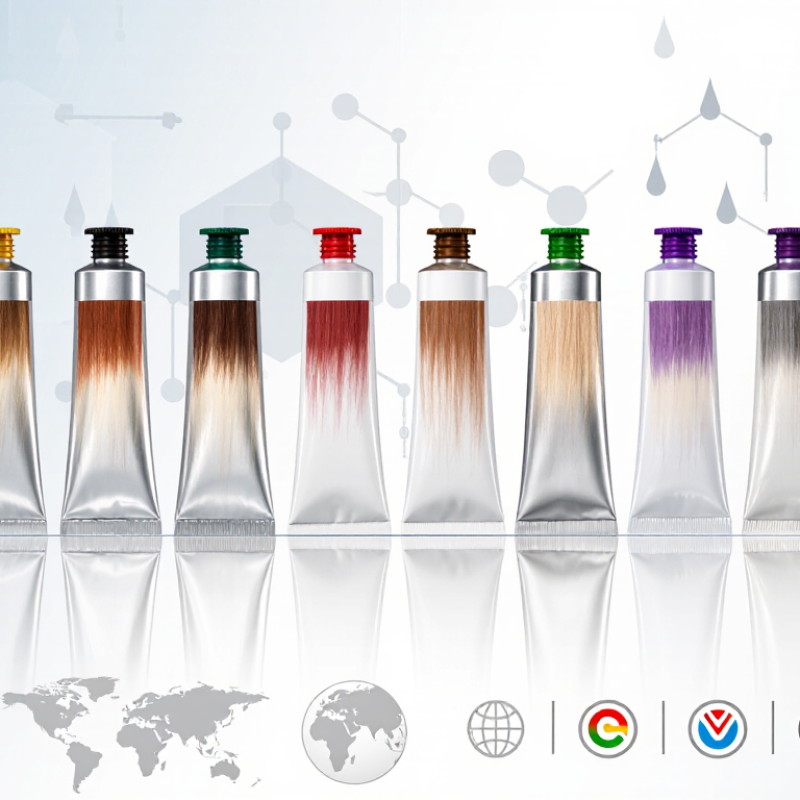
10 Best Hair Color Tubes for Global Buyers?

What Are Hair Color Tubes and How Do They Work?

Hair color tubes are squeezable containers filled with concentrated coloring cream. The cream may contain dye precursors, alkalizing agents, conditioners, and stabilizers. It usually does not work alone. A measured developer releases oxygen and starts an oxidation reaction. This reaction forms larger color molecules inside the hair shaft. Those molecules create lasting color after rinsing. Semi-permanent formulas may use ready-made pigments instead.

The tube controls clean dispensing and helps protect the formula from air. Professional colorists check the shade level, hair condition, and developer strength before mixing. They also measure the ratio carefully, because extra developer can weaken coverage or change the final tone. During application, the mixture opens the cuticle slightly and allows pigment to enter. Previously colored hair may respond unevenly. Results are never perfectly predictable.

Global buyers should inspect the ingredient list, batch information, seal, and usage instructions. A tube alone may not include developer, gloves, or an applicator. Always perform a patch test and a small strand test according to local instructions. Grey hair, porous ends, and dark natural roots can need different processing approaches. A practical mistake is assuming the printed shade will look identical on every head. Lighting, water quality, and hair history can alter the result. Professional advice remains valuable when the hair is damaged or chemically treated.

10 Best Hair Color Tubes for Global Buyers

Hair color tubes are squeezable containers that protect cream colorants from air, light, and contamination while allowing controlled dispensing. Common professional tube formats typically contain 60–120 mL, depending on the product type and market.

The chart compares commonly used commercial fill-size formats rather than company or brand data. Buyers should also check tube material, nozzle design, closure type, oxidation protection, and compatibility with local labeling requirements.

Key Criteria for Comparing Hair Color Tubes

For global buyers, comparing hair color tubes requires more than checking price and printed design. The global hair color market reached about USD 25.41 billion in 2023, according to Grand View Research’s Hair Color Market Report. This growth increases pressure on suppliers to deliver consistent packaging across climates, filling lines, and distribution routes.

Material performance should lead the evaluation. Check whether the tube protects colorants from oxygen, light, and moisture. Aluminum offers a strong barrier, while multilayer plastic can improve flexibility and transport resistance. Ask for compatibility testing with oxidative creams, developers, pigments, and fragrances. Small differences matter. A tube that softens after storage is a costly surprise. I have seen packaging look excellent during sampling, yet fail after heat exposure. That deserves more honest reporting.

Closure quality also affects buyer confidence. Compare nozzle accuracy, cap torque, seal integrity, and crimp strength. The tube should dispense a controlled ribbon without sudden spurting. Request accelerated stability data, migration testing, and transport simulations. ISO 22716 guidance supports controlled cosmetic manufacturing practices, including traceability and quality control. Suppliers should provide batch records, material specifications, and clear ingredient-contact information. Sustainability needs careful judgment too. The Sustainable Packaging Coalition reports that packaging decisions should consider the full life cycle, not only recycled content. That is easy to overlook. A lighter tube may still perform poorly if it causes leakage, waste, or repeated replacements.

10 Best Hair Color Tubes for Global Buyers? - Key Criteria for Comparing Hair Color Tubes

Rank Anonymous Hair Color Tube Profile Color Technology Typical Tube Size Ammonia Level PPD / PTD Position Grey Coverage Typical Processing Time Recommended Developer Typical Shade Range Vegan Formula Availability Global Buyer Advantage Overall Score
1 Permanent Cream — Balanced Performance Oxidative permanent cream color 60 ml Standard ammonia formula Usually available in both PPD/PTD and alternative versions Up to 100% when correctly formulated and applied 30–45 minutes 20-volume / 6% for coverage; higher strengths for lift 60–100 shades Depends on formulation Strong coverage, broad shade selection, easy salon training 9.4
2 Low-Ammonia Permanent Cream Permanent oxidative color with reduced ammonia odor 60 ml Low-ammonia or ammonia-reduced Usually offered with PPD/PTD and sensitizer-reduced alternatives Up to 100% with suitable natural-base shades 30–40 minutes 10- or 20-volume / 3%–6% 50–90 shades Commonly available Better consumer acceptance while retaining permanent results 9.2
3 Ammonia-Free Permanent Cream Oxidative color using an alternative alkalizing system 60 ml Ammonia-free May contain PPD/PTD unless specifically excluded Up to 100%, depending on shade and base color 30–45 minutes 20-volume / 6% is commonly used 40–80 shades Frequently available Low odor and suitable for markets with ammonia concerns 9.0
4 High-Lift Blonde Tube Permanent high-lift oxidative color 60 ml Usually higher alkalinity Often contains oxidative dye intermediates; allergy labeling is essential Limited grey coverage compared with natural-base shades 45–60 minutes 30- or 40-volume / 9%–12% 10–25 blonde shades Available in selected formulas Can lift natural hair several levels without separate bleach in suitable cases 8.8
5 Demi-Permanent Gloss Color Deposit-focused oxidative color 60 ml Ammonia-free or very low ammonia Often uses lower dye concentration; PPD/PTD status varies Blends grey rather than providing full coverage 20–30 minutes Low-volume developer, typically 1.5%–4% 30–70 shades Often available Low commitment, useful for toning and color refresh services 8.7
6 Direct-Deposit Fashion Color Direct dye, non-oxidative color 100–250 ml Ammonia-free Typically PPD/PTD-free, but ingredient lists must be checked Does not provide reliable grey coverage 20–40 minutes Used without developer 20–60 vivid and pastel shades Commonly available Easy shipping, simple application, strong appeal in fashion-color markets 8.5
7 Natural-Ingredient Positioning Tube Permanent or demi-permanent oxidative cream with botanical additives 60 ml Low-ammonia or ammonia-free May still contain oxidative dye allergens; “natural” does not mean allergy-free Up to 100% in selected permanent shades 30–45 minutes 10- or 20-volume / 3%–6% 30–70 shades Often available Matches demand for botanical claims and cleaner ingredient positioning 8.4
8 Sensitive-Scalp Permanent Cream Permanent oxidative color designed for reduced irritation potential 50–60 ml Ammonia-free or low-ammonia May use alternative dye systems; patch testing remains necessary Up to 100% in suitable shades 30–45 minutes 20-volume / 6% is typical 30–60 shades Available in selected ranges Useful for pharmacies, professional salons, and sensitive-scalp consumers 8.3
9 Professional Compact Tube Concentrated permanent or demi-permanent cream color 45–50 ml Varies by formula Must be confirmed through the full ingredient declaration Usually 70%–100% for permanent natural-base shades 25–45 minutes 10- or 20-volume / 3%–6% 40–100 shades Depends on formulation Lower shipping volume and flexible shade inventory for salons 8.1
10 Large-Format Value Tube Permanent oxidative cream color 100–125 ml Usually standard or low ammonia PPD/PTD status varies; regulatory documentation is required Up to 100% in natural-base shades 30–45 minutes 20-volume / 6% is commonly used 30–80 shades Available in selected formulas Lower cost per application and suitable for high-volume professional use 8.0

Note: Specifications are representative market-comparison criteria. Buyers should verify the current ingredient list, safety data sheet, patch-test instructions, labeling language, shelf life, and destination-market compliance before purchase.

10 Best Hair Color Tubes for Global Buyers

For global buyers, the 10 best hair color tubes should balance shade accuracy, safety, and shipping practicality. Professional experience shows that cream formulas spread evenly and reduce dripping during application. Choose tubes with clear shade codes, batch numbers, expiry dates, and full ingredient lists. Useful options include 1) permanent natural brown, 2) permanent black, 3) cool blonde, 4) warm blonde, 5) copper, 6) burgundy, 7) semi-permanent fashion color, 8) ammonia-free cream, 9) gray-coverage color, and 10) gentle color for sensitive scalps. Each type serves a different customer need.

Look for sealed aluminum or laminated tubes that resist heat, moisture, and pressure. A reliable supplier should provide safety data, usage instructions, developer ratios, and documents required in the destination market. Patch testing remains essential, even with familiar formulas. Follow local cosmetic regulations. Do not assume one formula suits every country. Hair porosity, climate, water quality, and styling habits can change the final shade. I have seen a beautiful catalog color turn darker on porous hair. That mistake is easy to overlook. Buyers should request sample tubes, test color on hair swatches, and check oxidation after several days. Compact packaging helps international shipping, but weak caps can cause leakage. Small details matter.cuntegn

Choosing a Hair Color Tube by Hair Type and Desired Result

Choosing among the 10 best hair color tubes starts with hair condition, not packaging. Grand View Research valued the global hair color market at about USD 23.9 billion in 2023. That growth reflects wider demand, but every head needs a different formula.

Fine, porous hair absorbs pigment quickly. Choose a gentler tube and a lower processing time. Thick, resistant, or heavily gray hair may need stronger coverage and careful developer matching.

Curly hair often feels drier, so cream formulas with conditioning agents can improve slip. Read the ingredient and usage directions carefully. Do not judge only by the color shown on the box.

Desired result matters just as much. Direct pigments suit temporary tone changes, vivid accents, or color refreshes. Oxidative color is more suitable for lasting shade changes and gray blending. The Professional Beauty Association recommends consultation, strand testing, and allergy awareness for color services. Mintel’s beauty consumer reporting also shows growing interest in personalized routines, rather than one formula for everyone.

Test a hidden strand first. It may reveal uneven porosity. Patch-test according to local safety instructions, even when the product feels familiar. A cool brown can turn nearly black on porous ends, while warm copper may look muted on naturally dark hair. The perfect tube is rarely perfect alone. Hair history still wins.

Safety, Packaging, and International Purchasing Considerations

10 Best Hair Color Tubes for Global Buyers

When comparing the ten best hair color tubes, safety should guide the buying decision. Check the full ingredient list, allergen warnings, batch number, expiry date, and manufacturer contact details. A clear patch-test instruction matters. So does a complete Safety Data Sheet and a recent Certificate of Analysis. These documents help importers review product quality before placing large orders. Claims such as “gentle” or “natural” need evidence, not attractive wording.

Packaging must survive long-distance handling. Strong laminated tubes can reduce cracking, while sealed caps help prevent oxidation and leakage. Ask for carton dimensions, tube capacity, pallet details, and sample packaging before confirming production. Labels may require different languages, measurement units, or warning statements in each market. Requirements vary. The importer should verify current rules with local authorities or a qualified compliance specialist.

International purchasing also depends on reliable documentation. Confirm the production lead time, minimum order quantity, lot-tracking method, and agreed delivery terms. Request pre-shipment photos and inspect random samples when possible. A low unit price can hide weak packaging, short shelf life, or expensive customs delays. I would not judge a tube by appearance alone. In practice, even careful buyers can overlook small label differences. That is worth reviewing before payment.

X