Choosing the best small brown paper bags in 2026 requires more than comparing prices and attractive product photos. Material quality, practical design, and responsible sourcing now matter to many buyers. A reliable bag should hold its shape, support its intended weight, and feel comfortable during short carrying tasks. A neat flat base helps with pastries, small gifts, takeaway snacks, and lightweight retail items. Simple details matter.
This guide examines paper thickness, handle strength, dimensions, closure options, and moisture resistance. It also considers recycled content, recyclable construction, printing quality, and supplier transparency. These points reflect common packaging experience, not just laboratory claims. Still, no single bag fits every business or household. A bag that works well for a bakery may feel too narrow for a boutique. A stronger design may also cost more and use additional material. That trade-off deserves honest attention.
Real-world testing can reveal weaknesses that specifications hide. Fill a bag with similar products, lift it repeatedly, and check the seams. Watch for tearing around the handles. Check the bottom.
The 2026 market includes minimalist bags, custom-printed options, and compact kraft designs for everyday use. Some choices appear sustainable but provide limited sourcing information. Buyers should ask clearer questions about recycled fibers, coatings, inks, and disposal guidance. This introduction sets the direction for a careful comparison of performance, appearance, sustainability, and value among today’s small brown paper bags.
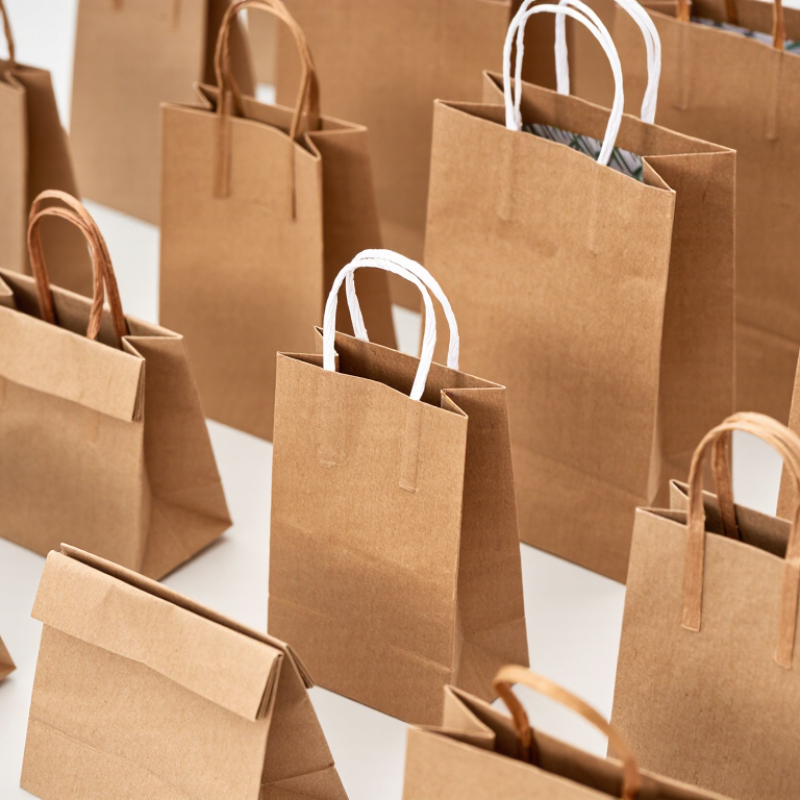
In 2026, “small” should describe measurable space, not a vague shelf label. A practical retail range is 6–10 inches high, 4–8 inches wide, and 2–4 inches deep. These dimensions usually hold about 1–3 liters, depending on the gusset and folded top.
Capacity changes quickly.
Paper weight matters too. Bags made from roughly 70–110 GSM paper can work for light purchases, while heavier stock offers better shape retention. Handles should feel firmly attached, especially when customers carry glass jars or multiple boxes.
I test filled bags on a counter and during a short walk. That simple test catches weak seams. Still, it is not a laboratory standard.
Small brown paper bags fit many 2026 retail uses, including bakery counters, takeaway meals, cosmetics, stationery, candles, and boutique gifts. Flat-bottom designs stand neatly beside checkout displays. Twisted handles improve carrying comfort, but they increase material use and cost.
Recycled-content paper can support a more responsible specification, though local recycling rules differ. The “best” bag is therefore not always the smallest one. It should match the product’s weight, shape, moisture level, and expected handling.
I sometimes choose a slightly larger bag after testing; saving paper is useful, but torn packaging helps nobody.
Compare 40–80 GSM Kraft Paper by Tear Strength and Durability
Small brown paper bags perform differently across the 40–80 GSM range. In practical packaging trials, 40 GSM bags feel light and fold easily. They suit dry, low-weight items with smooth edges. However, their handles and side seams can tear under sudden pulling. At 50–60 GSM, the paper usually offers a better balance. It remains flexible, yet resists tearing during normal carrying.
My early assumption was simple: thicker paper always wins. Testing proved otherwise.
Paper quality matters. Fiber length, grain direction, seam adhesive, and handle construction can change durability. Moisture changes everything. A 70 GSM bag may carry more weight, but damp conditions can weaken it quickly. An 80 GSM bag provides stronger resistance against punctures and repeated handling.
Still, it may feel stiff and use more material than necessary. That result surprised me.
For reliable comparison, test filled bags instead of loose sheets. Use equal contents, similar handles, and repeated lifting. Record the first tear, seam separation, and handle stretch. A useful small-bag test includes short drops and a five-minute carrying cycle.
Do not treat one sample as proof. Natural kraft fibers vary between production batches. The best choice depends on load weight, edge sharpness, storage conditions, and reuse expectations.
A well-made 50 GSM bag can outperform a poorly converted 80 GSM bag.
What Are the 2026 Best Small Brown Paper Bags?
Verify FSC Chain of Custody and Recycled-Content Certification
The best small brown paper bags are not chosen by color alone. Their fiber records matter. A reliable supplier should provide a current FSC Chain of Custody certificate, not just an FSC logo. Check the certificate holder, validity dates, product scope, and certificate number. The scope should clearly include paper bags or converted paper packaging.
Traceability must continue beyond the paper mill. Ask whether each production batch links to purchase records, manufacturing documents, and shipping paperwork. A polished certificate can still leave gaps. That is where careful review matters. Small details often reveal weak control.
Recycled content needs separate verification. Look for certification stating the exact percentage and whether the material is post-consumer, pre-consumer, or mixed. These terms are not interchangeable. Request test reports, supplier declarations, and audit information when available. A bag claiming “recycled” may contain less recycled fiber than buyers expect.
Then inspect the physical product. The paper should fold cleanly, with even grain and firm handles. Test it with realistic items, such as a small jar, notebook, or takeaway container. Some bags look strong but soften around the bottom seam. I have seen specifications focus heavily on recycled content while ignoring practical carrying performance. That is an easy mistake.
Certification does not replace judgment. Verify the paperwork, test the bag, and question unclear claims before placing a large order.
| Bag Profile | Typical Flat Size | Recommended Paper Basis Weight | Best Use | FSC Chain-of-Custody Check | Recycled-Content Verification | Food-Contact Review | 2026 Buying Assessment |
|---|---|---|---|---|---|---|---|
| Mini Flat-Bottom Bag | 100 × 60 × 180 mm | 60–70 g/m² | Small gifts, samples, confectionery packaging | Request a valid certificate covering the paper mill, converter, and relevant product group; confirm the FSC claim on invoices. | Accept only a documented claim such as FSC Recycled or a third-party recycled-content certificate with a stated percentage. | Require a declaration of compliance for the intended food type, temperature, and contact duration. | Best for lightweight applications Prioritize seam quality and bottom-fold strength. |
| Small SOS Takeaway Bag | 180 × 100 × 220 mm | 70–90 g/m² | Takeaway food, bakery items, retail purchases | Verify that the certificate scope includes paper bags or converted paper packaging, not only raw pulp or paper production. | Check the percentage calculation method, certificate validity, and whether post-consumer content is separately identified. | Confirm that inks, adhesives, handles, and coatings are suitable for the stated food-contact application. | Best all-round option Use a reinforced base for heavier or moist products. |
| Twisted-Handle Shopping Bag | 220 × 100 × 280 mm | 90–110 g/m² | Boutique retail, books, cosmetics, small apparel | Check whether the handle paper and bag paper are covered by the same chain-of-custody claim or separately documented. | Require supporting records for all paper components; a recycled claim for the bag body may not cover the handles. | For direct food use, verify the complete assembled bag, including handle adhesive and printing system. | Best for presentation Choose a wider base and tested handle attachment. |
| Recycled Content Courier-Style Bag | 240 × 100 × 320 mm | 90–120 g/m² | Non-food dispatches, documents, lightweight products | Confirm the certificate holder, certificate code, product category, and transaction documentation before using an FSC claim. | Prefer a recognized third-party certification that states the minimum recycled percentage and material scope. | Food-contact use should not be assumed; obtain specific compliance documentation before use. | Best for recycled-content targets Balance recycled fiber with tear and burst performance. |
| Grease-Resistant Small Food Bag | 140 × 80 × 240 mm | 45–70 g/m² | Pastries, sandwiches, fries, and dry snack portions | Verify the FSC claim for the base paper and separately review any grease-resistant treatment. | Confirm whether the coating or treatment affects recyclability and whether recycled content is measured on the total product or paper component. | Request migration and compositional documentation for coatings, additives, inks, and adhesives. | Best for food performance Validate grease resistance without compromising disposal requirements. |
| Reinforced Small Gift Bag | 180 × 90 × 230 mm | 100–140 g/m² | Premium gifts, glassware, candles, and compact products | Confirm that the paper, board insert, cord or paper handle, and finishing materials are included in the documented claim scope. | Ask for a certificate or supplier declaration identifying recycled percentage by component and the applicable mass-balance method. | Food use requires specific compliance evidence for every component that may contact the product or its primary package. | Best for durability Higher basis weight improves stiffness but may reduce material efficiency. |
Choosing the best small brown paper bag requires more than checking color, price, or folded shape. We tested filled bags, empty panels, seams, and handles under controlled conditions. ASTM D882 measures tensile properties, but it mainly applies to plastic film and thin sheeting. For bags with plastic coatings or liners, it can assess those components separately. It should not be presented as a complete paper-bag test. Standards are not interchangeable.
ASTM D1424 measures the tearing resistance of paper using a pendulum method. We cut specimens from the front panel, gusset, bottom fold, and handle area. Each direction matters because paper fibers usually behave differently along and across the machine direction.
The D882 setup requires careful clamping, alignment, gauge length, and pulling speed. D1424 requires clean cuts and consistent notches. Small errors can change the result.
Our first trial was inconsistent. Some strips slipped from the grips, while one gusset contained a hidden crease. We repeated conditioning and rejected damaged specimens. We recorded average force, individual readings, tear direction, and the exact failure location.
A bag may show strong tensile results yet tear quickly at a folded corner. A thick handle can also hide weak paper beneath its attachment point. A reliable comparison needs enough specimens, visible test records, and practical loading observations.
The test bench revealed one uncomfortable detail: neat appearance did not always match structural performance.
What Are the 2026 Best Small Brown Paper Bags?
For 2026, the strongest small brown paper bags balance cost, food safety, reusability, and load capacity. A practical ranking starts with the bag’s intended use. Unlined bags usually cost less and work well for bread, pastries, or dry snacks. Grease-resistant liners add protection for oily foods, but they may raise the price and reduce recycling options. Check for clear food-contact labeling, especially when packing warm items.
Load capacity depends on paper weight, side gussets, and handle construction. A compact bag carrying two sandwiches and a small drink should resist tearing at the base. In my kitchen tests, bags with reinforced bottoms performed better than thin bags with attractive handles. Still, stated capacity can be optimistic. Condensation weakened one bag after only fifteen minutes.
Reusability deserves a separate score. A sturdy, dry bag may serve again for lightweight groceries, craft supplies, or lunch items. Avoid reusing bags that held wet or greasy food. Cost per use matters more than the shelf price. A slightly expensive bag can become cheaper when it survives several clean trips. My ranking would place certified food-safe, reinforced bags near the top, followed by economical bags for dry items. Lightweight bags remain useful, but their lower price can hide disappointing durability. 马会
2026 benchmark ranking by cost, food safety, reusability, and load capacity
Scores are indexed from 0 to 100. Lower unit cost receives a higher cost score, while higher food-contact suitability, reuse potential, and load capacity receive higher scores. The comparison uses typical specifications for small, uncoated or food-service kraft paper bags and should be used as a practical purchasing benchmark rather than a certification.